
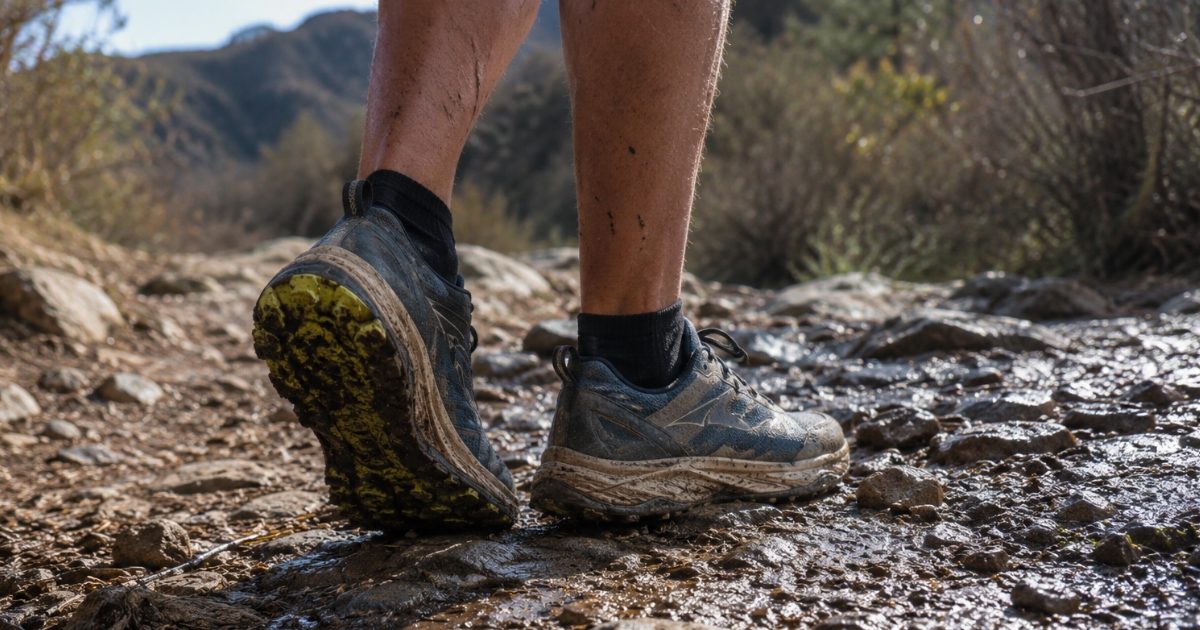
From Hardpack to Wet Rock, Trail Surfaces Change What Runners Need Underfoot
A trail running shoe can look perfectly capable sitting on a shelf and feel entirely wrong once the ground becomes loose, slick, or uneven. The reason is fairly simple. Trails do not ask the same thing of footwear everywhere. A smooth dirt path favors easy transitions and efficient movement, while a rocky descent places far more emphasis on grip, protection, and keeping the foot stable inside the shoe.
It makes sense to begin a footwear decision by thinking about where most of the running actually happens. Runners who spend their time on maintained park trails have different needs from those regularly crossing muddy woodland paths or rocky mountain terrain. Even within one trail network, the surface underfoot may change several times before the run is over.
Lug Depth Changes the Way a Shoe Meets the Trail
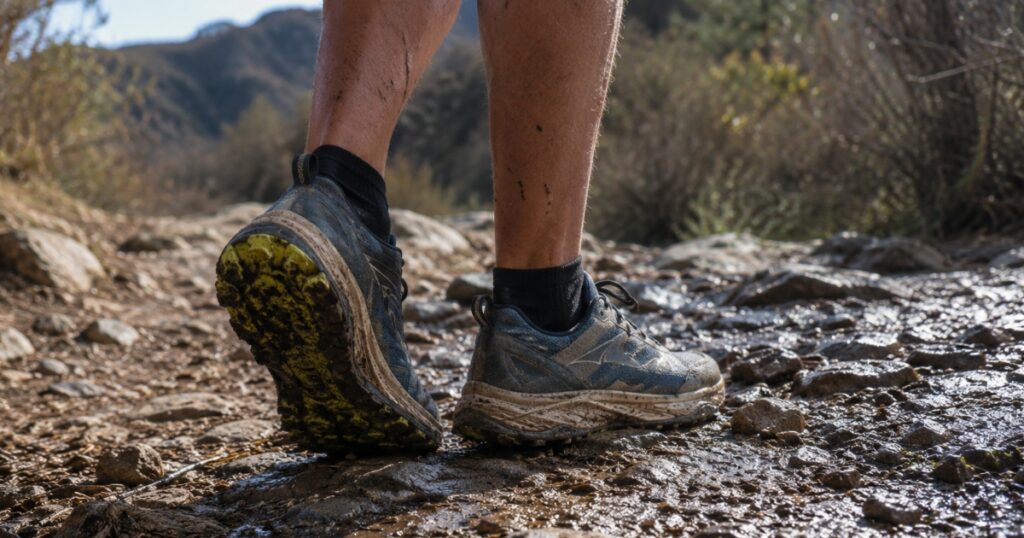
Turn over two trail shoes and the differences can be obvious. Some have shallow, tightly arranged outsole lugs. Others use deeper, widely spaced shapes that look considerably more aggressive. Those patterns are not merely cosmetic. They influence how the shoe finds purchase on different surfaces.
Shallower lugs can feel natural on packed dirt and firm trails, where there is little need for the outsole to dig deeply into the ground. Loose gravel and soft soil tend to favor a more pronounced tread. Mud creates another problem because closely spaced lugs can collect material between them. Wider spacing gives mud more room to release as the foot leaves the ground rather than allowing the outsole to become a relatively smooth layer of packed dirt.
Wet Rock and Roots Put Rubber to the Test
Deep tread alone does not solve every traction problem. Wet rock and damp roots are hard surfaces, so there is little for a lug to penetrate. Here, the rubber compound and the amount of contact the outsole maintains with the surface become particularly relevant.
Softer, tackier rubber can provide useful grip on slick surfaces, although rubber compounds also involve tradeoffs involving durability and rolling feel. Foot placement still matters enormously. No outsole makes a rain-soaked root predictable, and runners often need to shorten their stride or moderate their pace when the trail becomes slick. Good footwear supports careful movement rather than replacing it.
Cushioning and Protection Need to Fit the Terrain
A highly cushioned shoe may feel welcome during long outings, but cushioning is only one part of underfoot comfort. Technical trails introduce sharp rocks, uneven edges, and repeated impacts that can make foot protection equally important. Some trail shoes incorporate rock plates or firmer protective materials beneath the foot to reduce the harshness of those encounters.
More cushioning is not automatically the better choice. On uneven ground, some runners prefer a closer connection to the trail because it makes foot placement easier to judge. Others appreciate additional cushioning over longer distances. Shoe geometry, stack height, fit, and the runner’s own preferences all influence that balance between protection, comfort, and stability.
Wet Feet Change the Footwear Conversation
Rain is not the only way trail shoes become wet. Stream crossings, puddles, damp vegetation, and mud can soak footwear even under clear skies. Once water gets inside, a shoe’s ability to release it can matter more than keeping every drop out in the first place.
Breathable uppers and drainage-friendly construction can be useful when getting wet is unavoidable. A waterproof shoe may make sense in certain cold or consistently wet settings, but it can also retain water if moisture enters from above the collar. Socks matter here, too. Footwear works as a system, and moisture management becomes especially important on longer runs where dampness and friction have more time to cause discomfort.
Not Every Trail Requires a Dedicated Trail Shoe
The word “trail” covers an enormous range of surfaces. A route consisting mostly of pavement, gravel paths, and firm dirt may not require the aggressive tread or substantial protection found on shoes intended for technical mountain terrain. A road-to-trail model can make more sense when the run regularly moves between those surfaces.
For active runners such as Steven Rindner, choosing footwear is less about finding one trail shoe for every situation and more about understanding what lies beneath each step. Packed dirt, loose gravel, mud, roots, and rock all interact differently with an outsole. Paying attention to those differences makes traction, drainage, cushioning, and protection practical parts of shoe selection rather than features considered in isolation.