
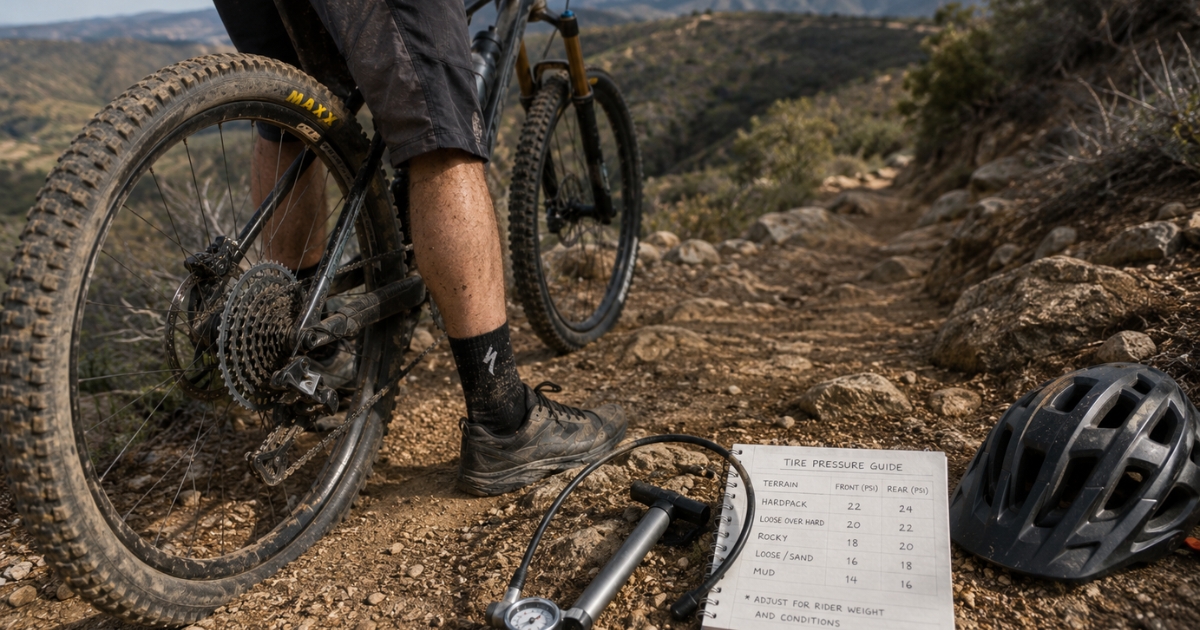
Mountain Bike Tire Pressure is a Trail Decision, Not Just a Number on the Gauge
A few pounds of air can make a mountain bike feel noticeably different. Add too much pressure, and the tires may bounce across rocks instead of conforming to them. Go too low, and the bike can begin to feel vague in corners, while the rims become more vulnerable when the trail turns rough. Somewhere between those extremes is a useful range rather than one perfect number.
That range depends on more than personal preference. Rider weight, tire width and volume, casing construction, rim width, riding style, and whether the setup uses tubes or sealant, all influence how much pressure makes sense. The trail adds another variable. What feels right on smooth hardpack may be less suitable when the next ride heads into loose dirt and broken rock.
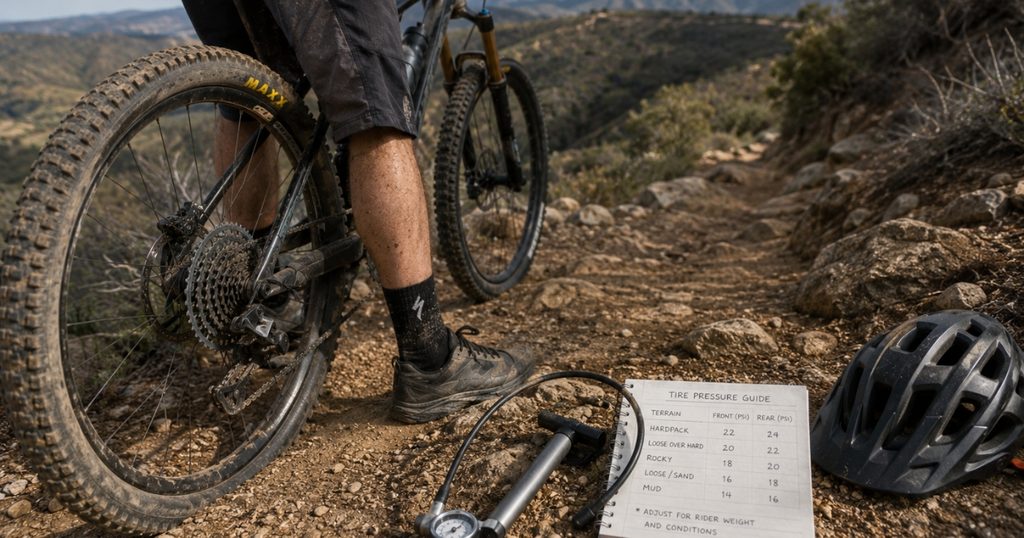
Hardpack Often Favors a Firmer Feel
Firm, relatively smooth trails generally place fewer demands on a tire’s ability to deform around obstacles. A somewhat firmer setup can reduce excessive tire movement and preserve the quick rolling sensation many riders appreciate on hardpack. That does not mean pumping the tires until they feel rigid.
Traction still depends on keeping enough of the tire engaged with the ground, particularly when braking or leaning through corners. Too much pressure can reduce that connection and make small bumps feel harsher than necessary. Finding a useful setting is often a matter of keeping the bike lively without making the tires feel skittish.
Loose Ground Rewards a Larger Contact Patch
Loose soil and gravel create a different problem. Instead of pushing against a consistently firm surface, the tires have to find grip on material that moves beneath them. Reducing pressure modestly can allow the tire to conform more readily and increase its contact with the ground.
Sand can push this idea further, although tire volume becomes especially important. A wider tire at an appropriate lower pressure tends to float over soft terrain more readily than a narrow tire inflated firmly. Mud and wet trails introduce their own considerations. Lower pressure may support grip, but tread pattern, rubber compound, and trail conditions remain important, so pressure alone cannot compensate for a tire poorly suited to the surface.
Rocks Make Rim Protection Part of the Equation
Rocky terrain often exposes the tradeoff at the heart of tire pressure. Riders want enough compliance for the tire to wrap around irregular surfaces and maintain grip, but dropping too far increases the possibility of the tire bottoming against the rim during a hard impact.
That is one reason copying another rider’s pressure can be misleading. A heavier rider generally places greater loads on the tires, while aggressive riding can produce harder impacts than a smoother approach over the same trail. Tire casing and volume matter too. A larger, more supportive tire can behave very differently at a given pressure from a smaller or lighter construction.
Tubeless Setups Change the Lower End of the Range
Removing the inner tube changes what happens at lower pressures. Traditional tube setups can suffer pinch flats when an impact compresses the tube between the tire and rim. Tubeless systems remove that particular vulnerability, giving riders more freedom to experiment with lower pressures for traction and comfort.
There are still limits. Go too low, and a tire can squirm under hard cornering, lose air at the bead, or expose the rim to impacts. Riders who regularly encounter sharp rocks may also consider stronger casings or tire inserts as part of the overall setup. Tire pressure works alongside these components rather than functioning as an isolated adjustment.
Let the Trail Provide the Feedback
Pressure choices do not have to remain fixed from one ride to the next. A dry trail can become loose after weeks without rain, while wet weather may turn familiar dirt into slick ground. A trip to rockier terrain can place demands on the tires that a local hardpack loop never does. Starting with a known baseline and making small changes gives riders a practical way to learn what their setup is communicating.
For active mountain bikers like Steven Rindner, tire pressure is best treated as part of preparing the bike for the terrain rather than as a number chosen once and forgotten. Grip, comfort, rolling feel, cornering support, and rim protection all pull the decision in slightly different directions. Paying attention to how the bike responds across changing surfaces makes the pressure gauge more useful, because the numbers begin to reflect experience on the trail.